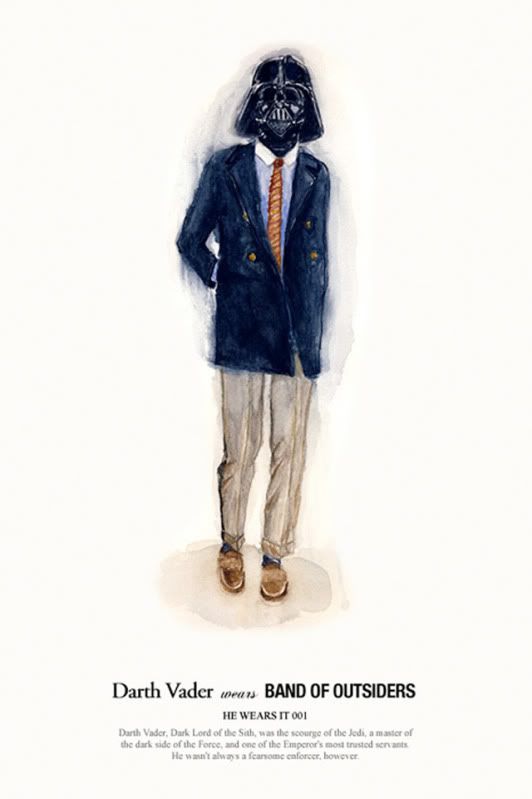
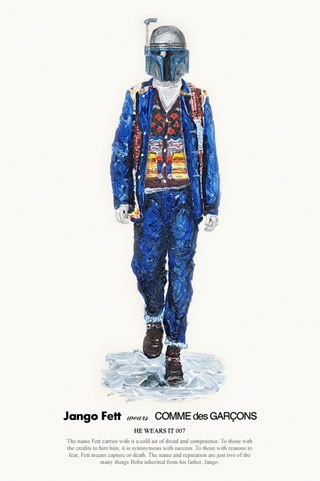
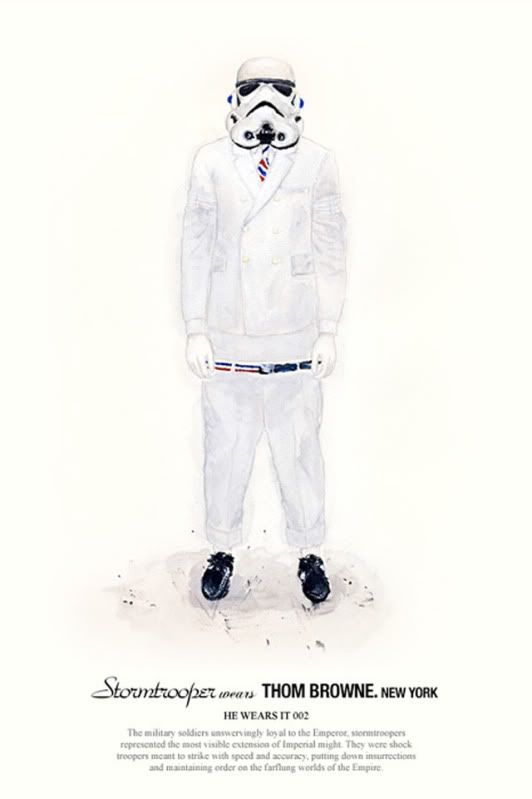
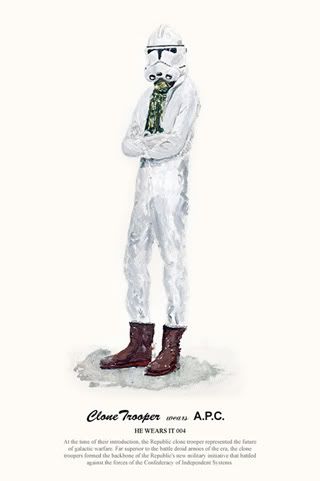
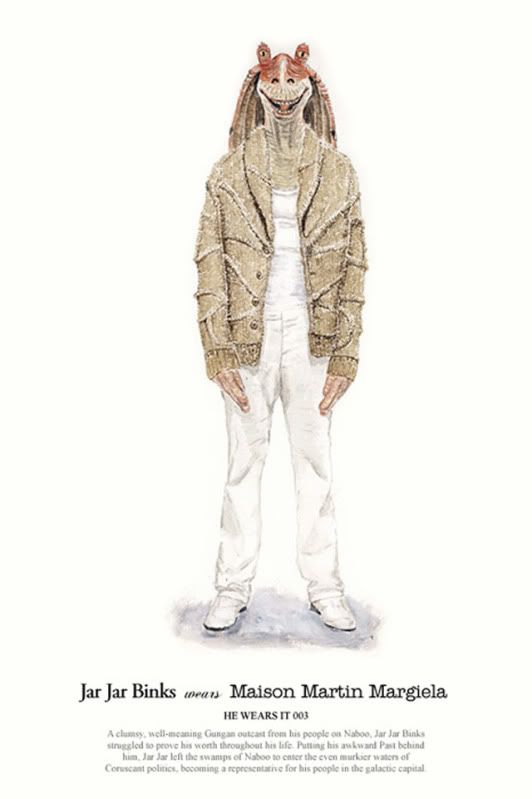
*He took a franchise for which I had nothing but joyous nostalgia and made me cringe. Defintely a villain.
{Surprisingly, this is via The Globe And Mail}


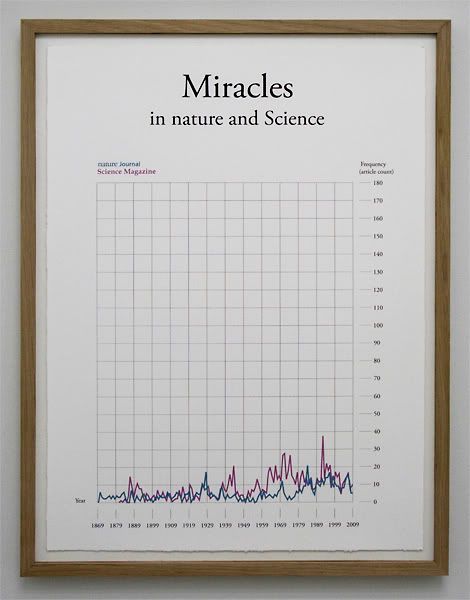
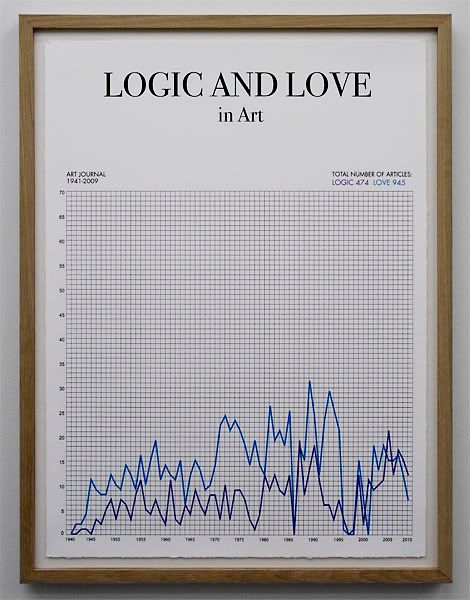
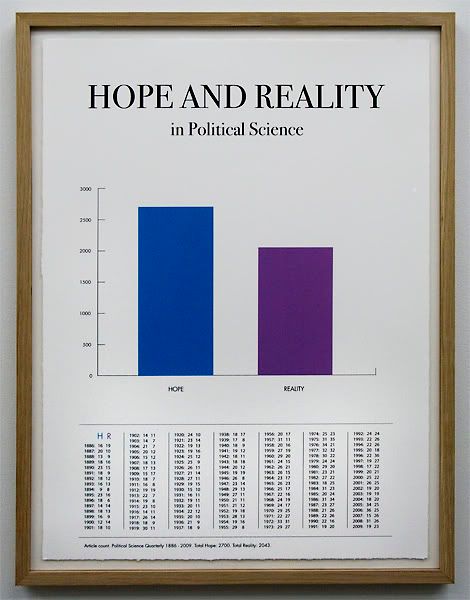
 She's previously tackled science and that inspiring place where art and science intersect. In Transcendental Physics she imagined the intersection of German astrophysicist Johann Zöllner (1834-1882), who studied optical illusions, and the Canadian/US visual artist Agnes Martin (1912-2004), an abstract expressionist who employed lines and grids. Zöllner discovered that parallel lines appear like they will intersect if cross-hatched with shorter lines at an angle - this is known as Zöllner's illusion as shown to the left. She drew her imagined Agnes Martin interpretation of this effect: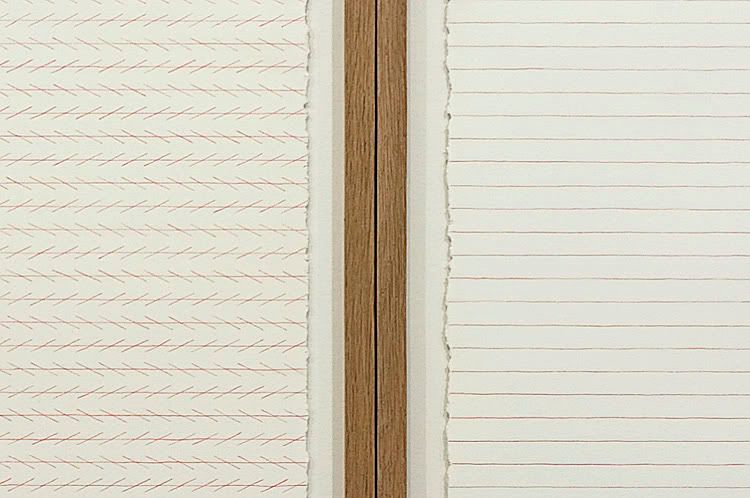
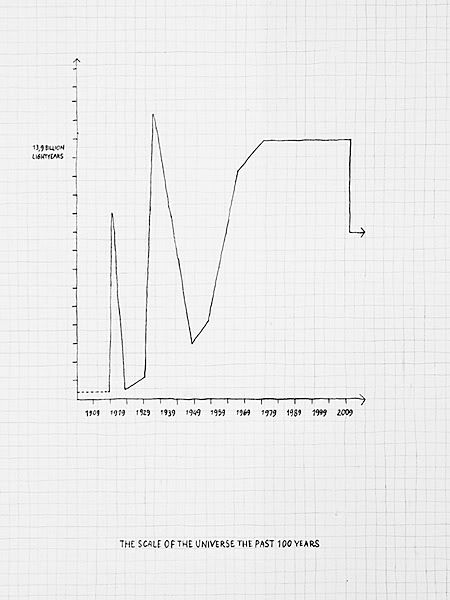
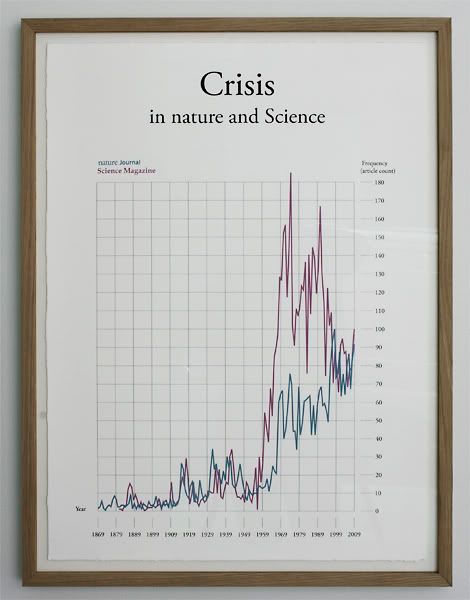
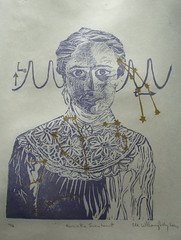 In 2009, she tackled a topic I've also depicted, in Variable Stars. She points out that at the beginning of the 20th century our estimated scale for the Universe increased radically, and she describes how the project of mapping and photographing the entire sky at the Harvard College Observatory, Cambridge, MA, employed cheap yet conveniently accurate female labour, with all the work done by 'The Havard Computers'. These women were literally treated as automatons and had no status as scientific staff. Nonetheless, as several 'Computers' were outstanding astronomers, they also developped theories about the immense dataset they painstakingly gathered. Henrietta Swan Levitt (shown in my lino block print portrait at left) made a discovery which forever changed our understanding of the scale of the Universe, allowed Hubble's later insight about the age and expansion of the universe and gave us 'Standard Candles' as a metre-stick for the Universe at large. She found a correlation between brightness and period of a particular type of variable stars, the Cepheid Variable stars. I tackled this subject by printing a portrait of Swan Leavitt with how luminosity varies with time and the constellations around and including Cepheus, where she made her discovery. Johannessen travelled to the Harvard College Observatory and dug through the archives, selecting plates showing any stars which would be visible from her location in Norway. She made copies of the photographs, she cut out the cepheid or RR Lyrae star (those used as 'Standard Candles') and them as seeds for growing crystals of alum, a substance that is used as a component in photographic paper. Her installation also included the plot above, photographs and the telescopes below.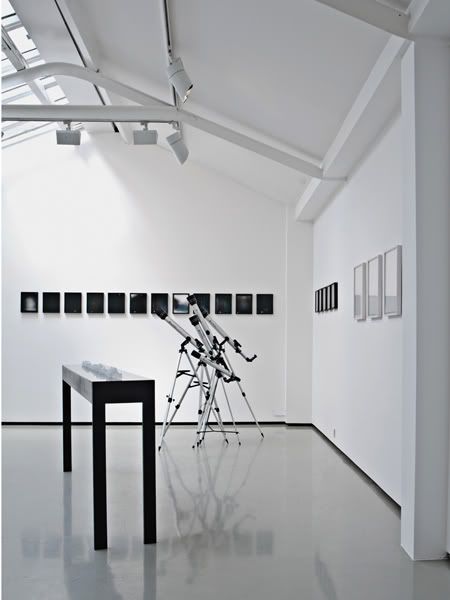
Δx Δp ≥ ħ/2