Sunday, October 11, 2009

Thanksgiving Canadiana

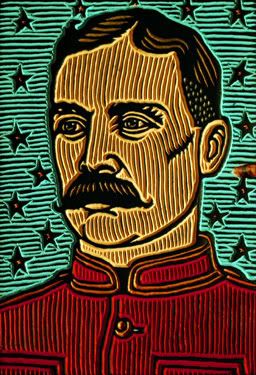
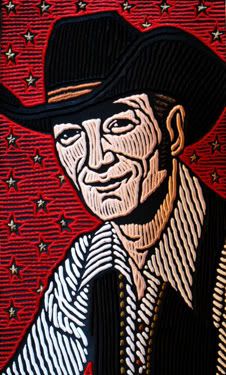
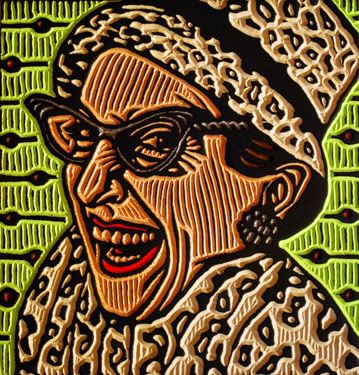
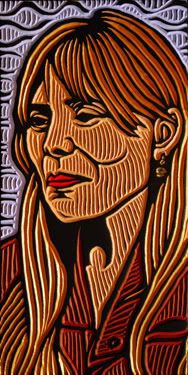
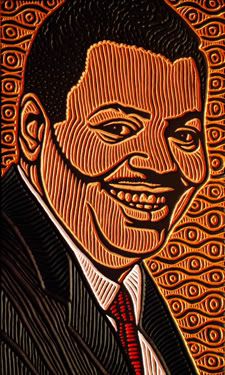
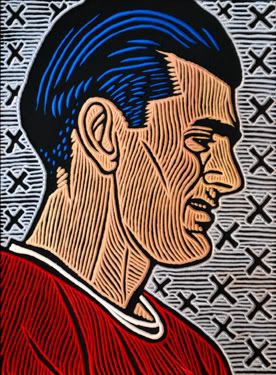
Happy Thanksgiving to my fellow Canucks! In honour (with a 'u') of (Canadian) Thanksgiving, I bring you some awesome Canadiana from Alberta artist Lisa Brawn. She makes woodcuts, usually on salvaged hundred year old Douglas fir. She uses the block (the carved wood) itself as the art rather than making prints. When I learned how to make woodblock prints, my teacher pointed out that I should take care with borders even if viewers of prints would never see them and I should treat the block itself as art. Brawn's blocks are art. They are also full of colour and pattern and life and humour. Check out her website and flickr stream for much, much more*.

We start with the Mounties, of course.

Sergeant Brooke Royal NW Mounted Police, Alberta, ca. 1900-1903
woodcut on salvaged 100 year old Douglas-fir
2009

Then, what could be more Canadian than,

Stompin' Tom
woodcut
2009

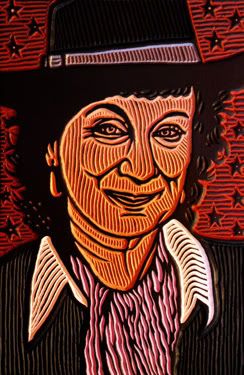
The author:

Margaret Atwood
woodcut
2009

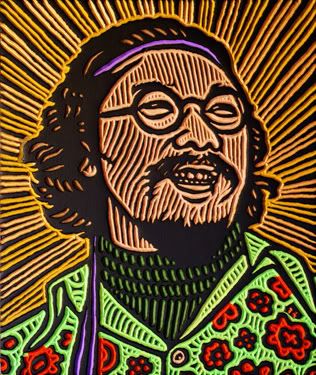
The rock-star-environmentalist:

David Suzuki
woodcut
2008

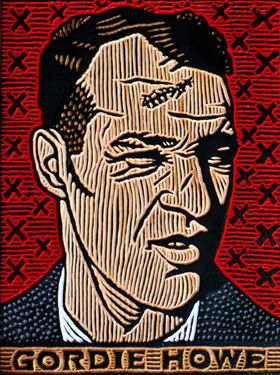
The hockey player:

"Mr. Hockey Gordie Howe showing off his fresh stitches. Two minutes for slashing!"

Lisa Brawn
woodcut

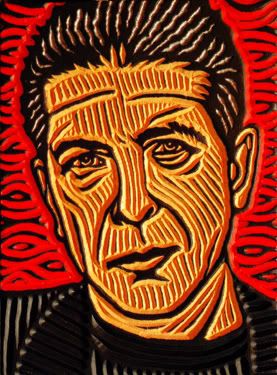
The poet:

Leonard Cohen
woodcut
2009

The comedian:

Andrea Martin
woodcut
2009

The singer-songwriter:

Joni Mitchell
woodcut
2009

The musician:

Oscar Peterson
woodcut
2009

and The Rocket:

Maurice Richard
woodcut
2009

*including circus acts, cult leaders, our PMs, musicians, actors, cowboys, pin-ups, macho men and macha women, and birds (she counts magpies rather than crows)

Wednesday, October 7, 2009

Sculpting about the Economy

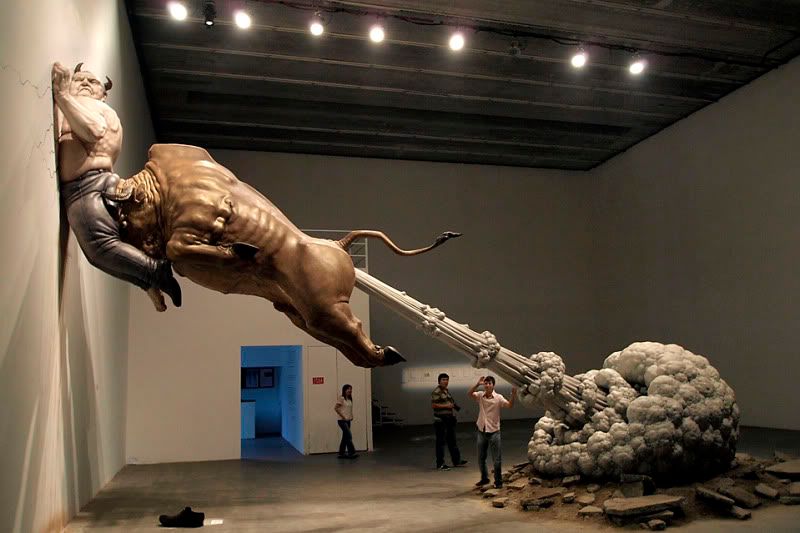
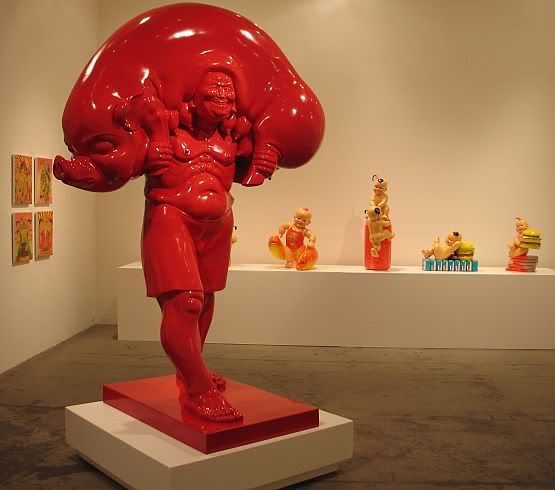
This photo of Chinese sculptor Chen Wenling's “What You see Might Not Be Real," comes via the Wall Street Journal of all places. This is because the bull represents Wall St and the man is Bernie Madoff. The sculpture is a critique of the financial crisis. It helps to know that fang pi in Chinese is both "to fart" and slang for "to lie".


“What You see Might Not Be Real"

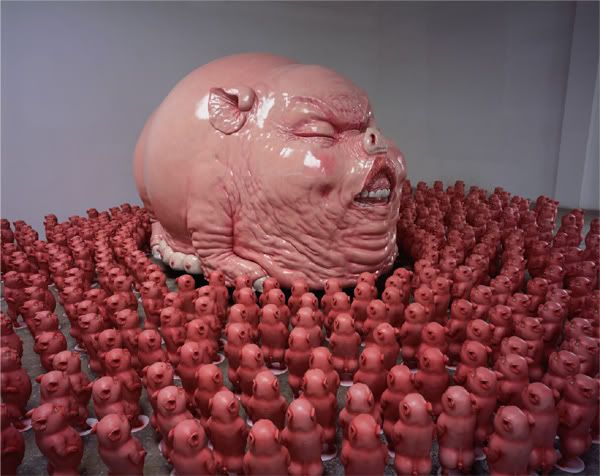
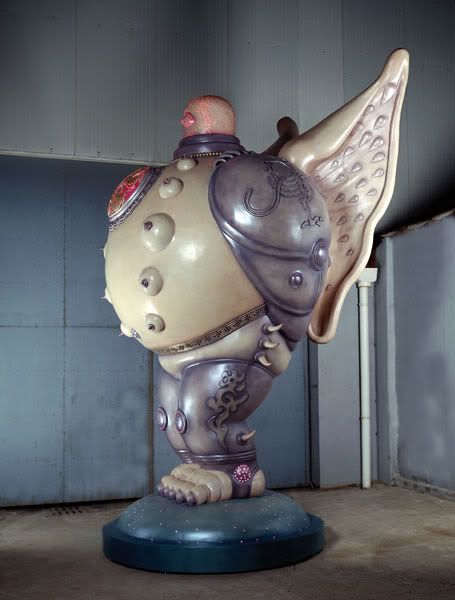
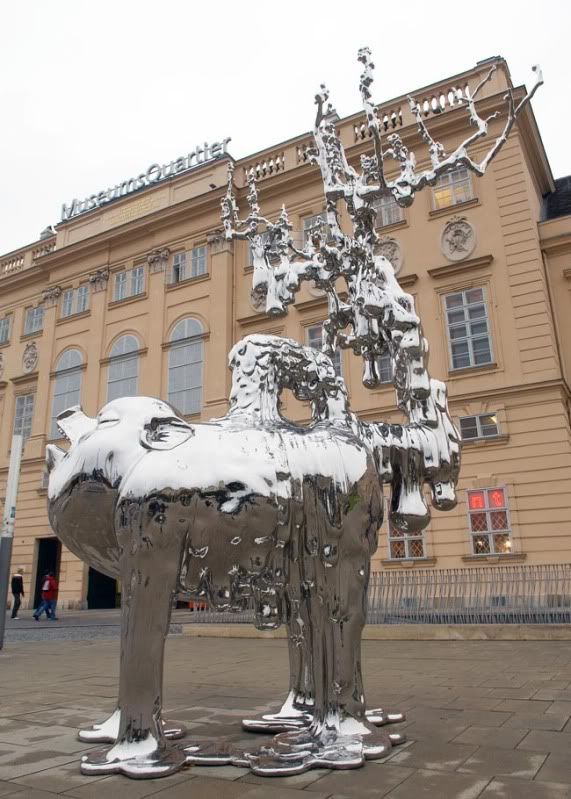
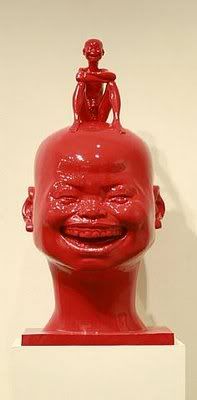
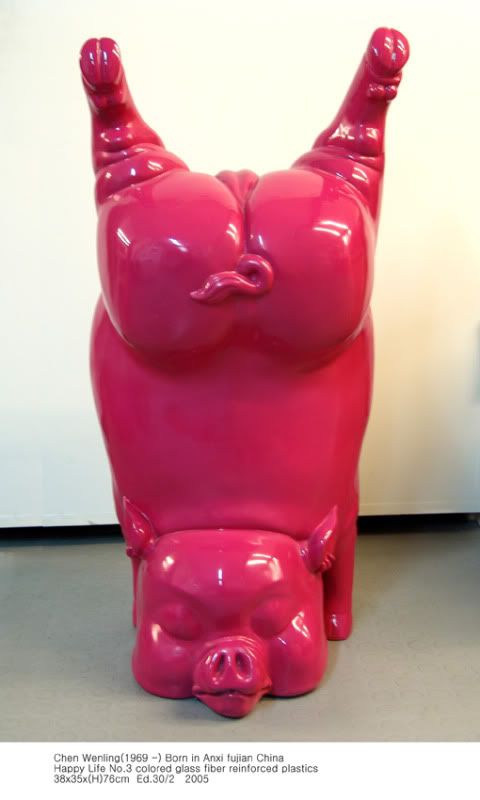
A lot of satire, some surrealism, and many pigs can be found in his work.


Chen Wenling, The God of Material, 2008 Sculpture, Fiberglass, 200 x 365 x252cm presented by Xin Dong Cheng Gallery


Uninvited Guest, 2008.


“Valiant Struggle No. 10″, 2006


"Happy Life No. 8"


Sunny Boy


Happy Life No. 3

Saturday, October 3, 2009

Dinosaurs, Typography and Aliens


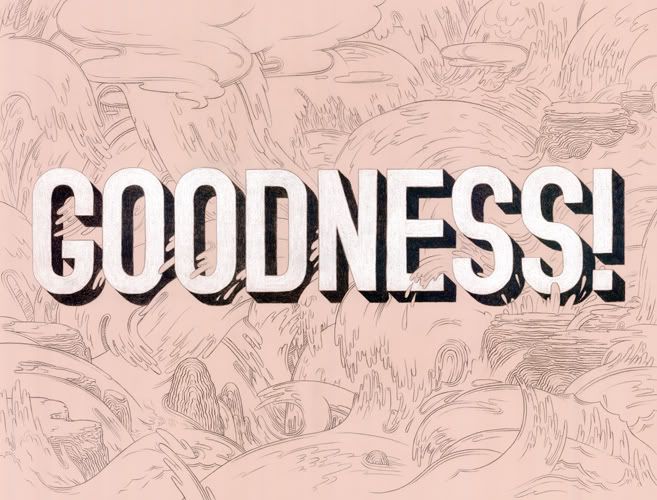
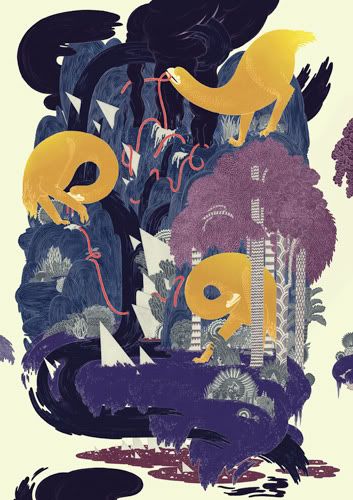
GOODNESS!
Graphite

Check out the portfolio of American illustrator Micah Lidberg, even if the navigation is annoying. It's worth it. (via Crafty magazine)


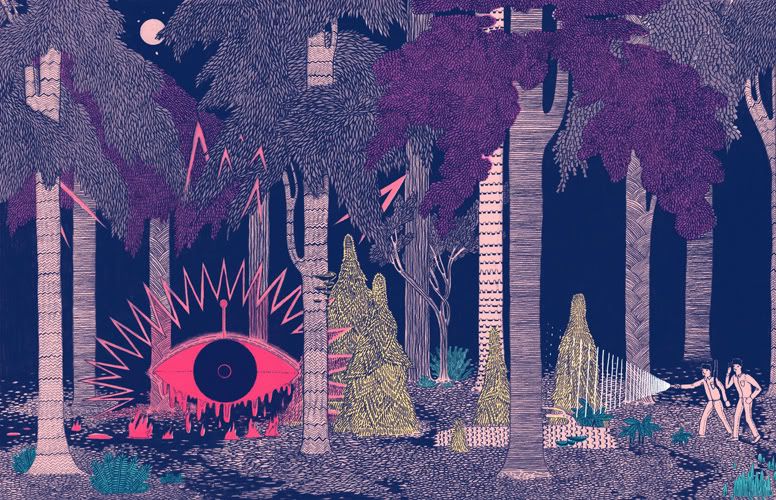
The Few
Graphite/digital


The Visit
Graphite/ink/digital


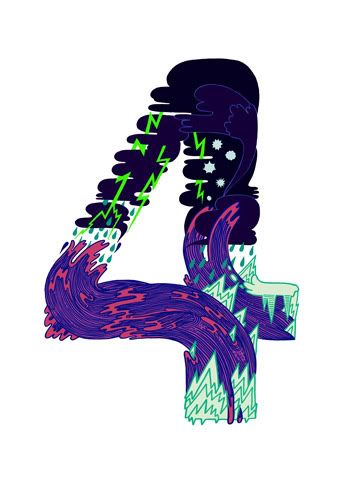
4 Matters
Ink/digital


Angry Cloud
Ink/digital

Wednesday, September 30, 2009

Defiant Satire, with Samurai Frog

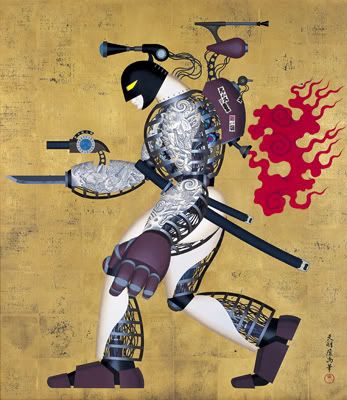
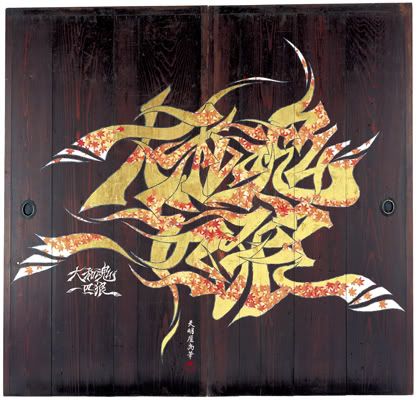
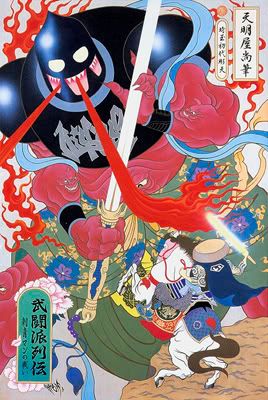
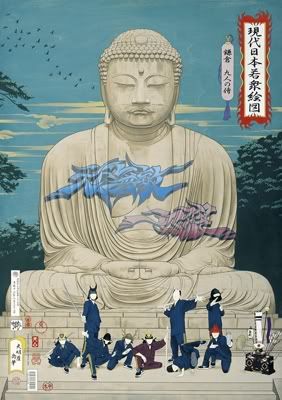
Artist Tenmyouya Hisashi takes traditional Japanese art, modern culture, graffiti tags and Japanese typography, Western stereotypes about Japan and makes a heady mix. These are some of my favorite things.


Japanese Spirit #13
2000
Acrylic, Gold leaf, Wood
106.5×91cm


Kanji Maple Leaves Graffiti Cedar Door Painting
2000.10
Acrylic,Gold leaf,Ceder panel door
185.4×177cm

What if Japanese graffiti artists used kanji (characters, rather than romanji - transliterated Japanese in Roman characters)?


Tattoo Man's Battle
1996
Acrylic, Wood
60×41.3cm


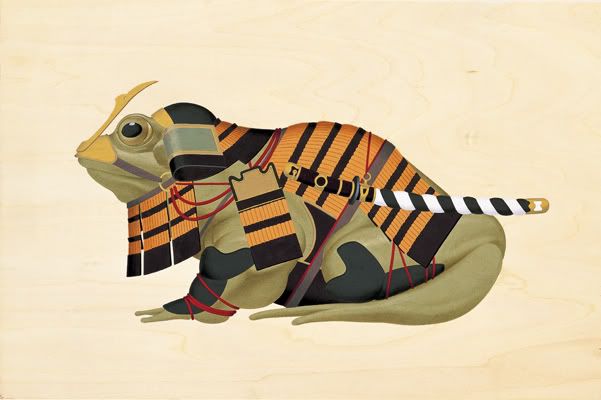
A Tree Frog Pretending to be a 'Warlord Frog' (Leopard Frog)
2002.9
Acrylic, Wood
20.2×29cm

A think the samurai frog is the coolest thing ever.


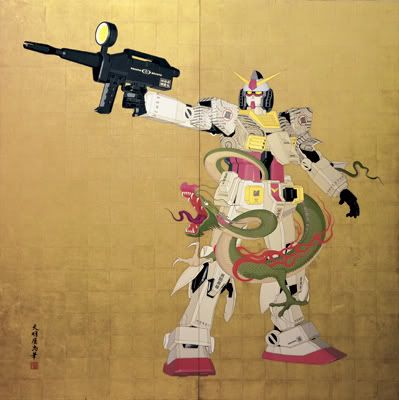
RX-78-2 Kabuki-mono 2005 Version
2005.3
Acrylic, Gold leaf,
Wood
200×200cm


Nine Kamakura Samurai
2001.8
Acrylic, Wood
59.8×42cm

Tenmyouya Hisashi writes,
I created these works in 2001 for the exhibition, "One Planet under a Groove: Hip Hop and Contemporary Art," which began at the Bronx Museum and went to various other museums in the United States. This could be called the ukiyo-e version of the "Japanese Spirit" series. These images were conceived especially for the eyes of non-Japanese viewers. Both of these works were published in the monthly magazine, "GETON!," and after the publication of "Kamakura Nine Samurai," the Great Buddha in Kamakura was actually defaced with spray-painted graffiti. This crime may have been committed by someone who saw my work in the magazine.


I've had the great pleasure of visting Kamakura, including the Daibutsu or giant Buddha. You can even go down a set of stairs and inside of the sculpture itself- in the belly of the Buddha. The fascinating thing is that it is covered in graffiti, on the inside... dating back centuries. The earliest one I found was dated seventeenth century.

Tuesday, September 22, 2009

Dancing about Architecture

Or painting and printmaking in fact. Is it like writing about music? O, delightful metaphor of dubious pedigree...

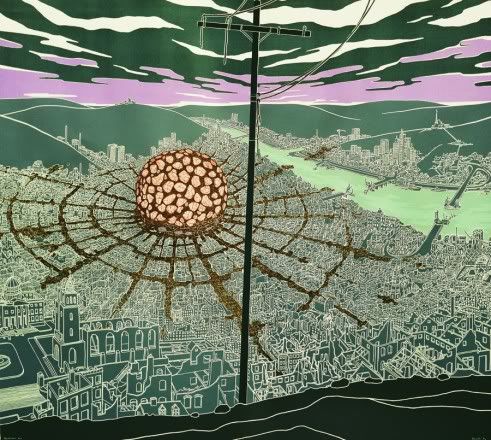
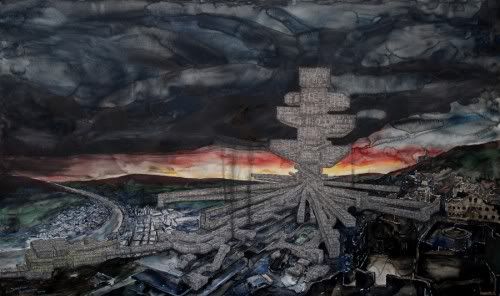
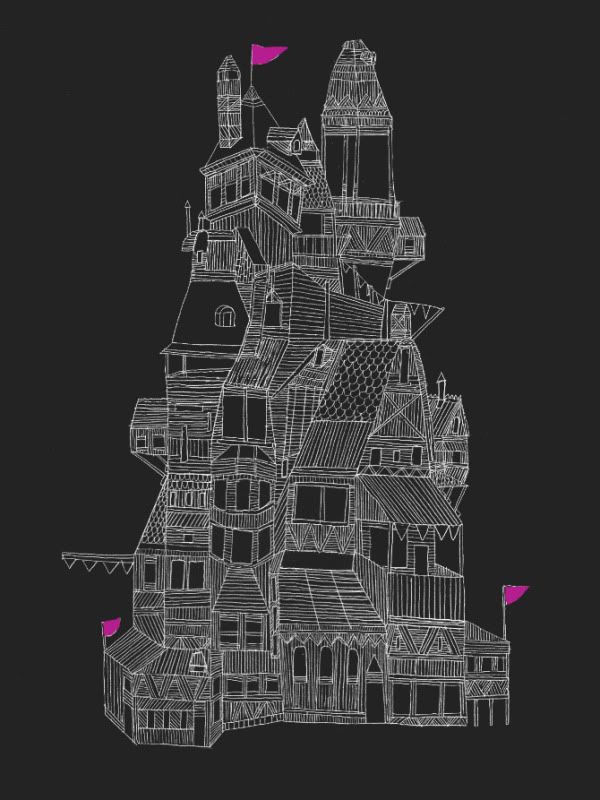
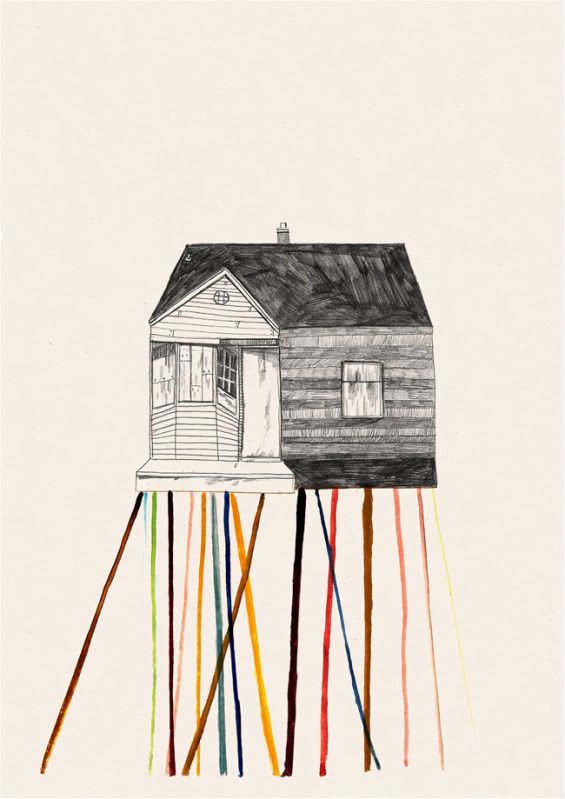
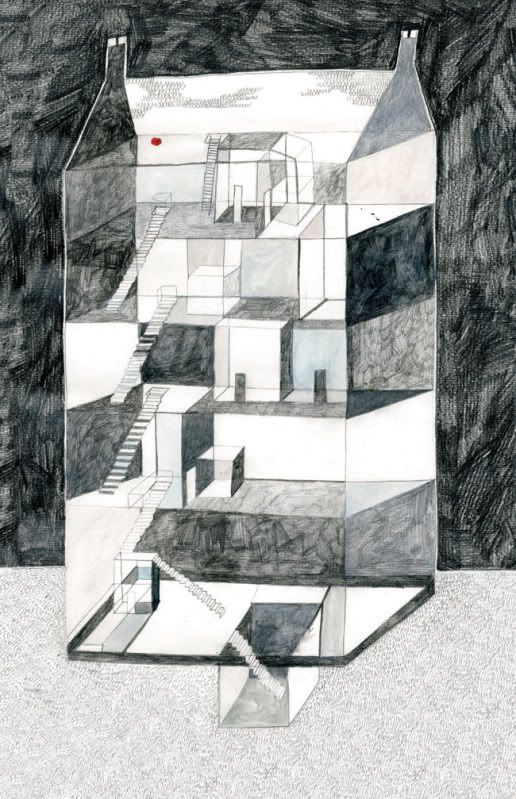
I keep seeing art about architecture. Much of it seems to be about the concept of "home". There is a lot of popular illustration that has a cozy, homey vibe these days. Perhaps, I'm contrary. I was moved by these dystopian images by Dutch artist Rob Voerman. Perhaps it is simply the genius of combining block printing, screenprinting and water colour as in Epicenter:

2007 Linoleumprint, silkscreen and watercolour on paper 201 x 180cm
Edition of 5 + 1AP

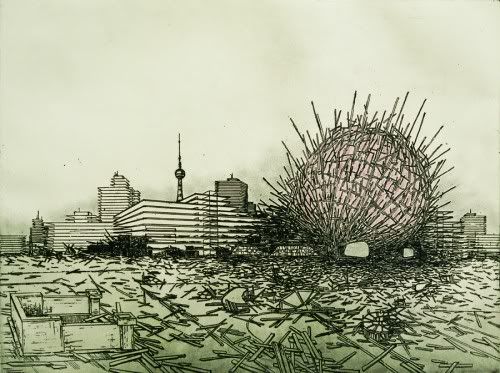
This one, Annex #3 could be Toronto, but isn't.

Annex # 3
2006 Etching on paper 40 x 30cm
Edition of 15 + 1AP


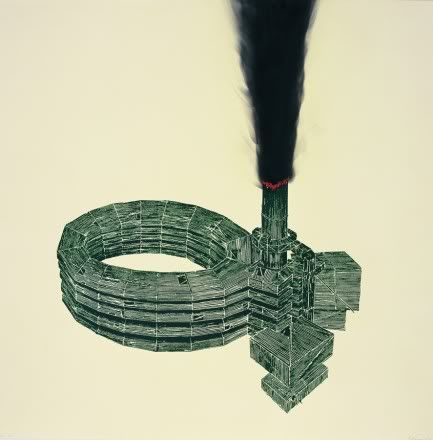
Untitled 2000
2000 Linoleum print and soot on paper 74 x 74cm
Edition of 20 + 1AP


Junction
2008 Watercolour and pencil on paper 193 x 116cm

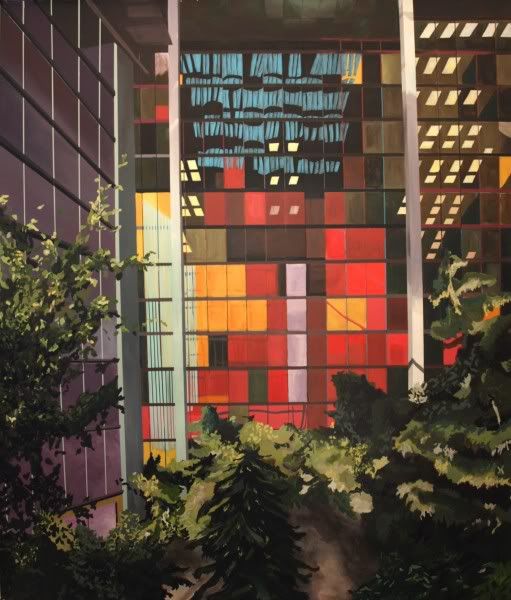
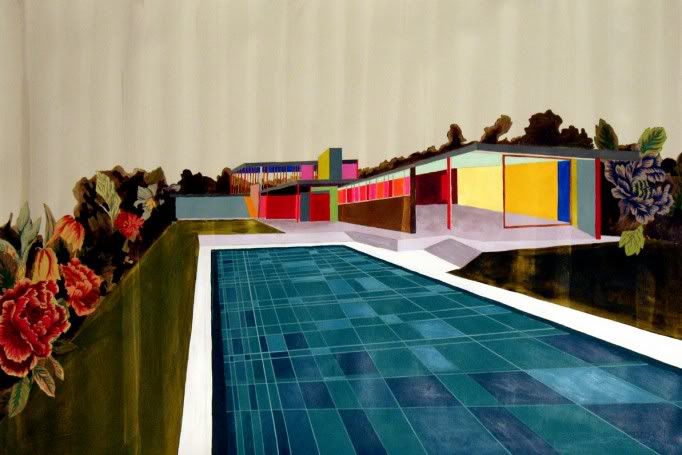
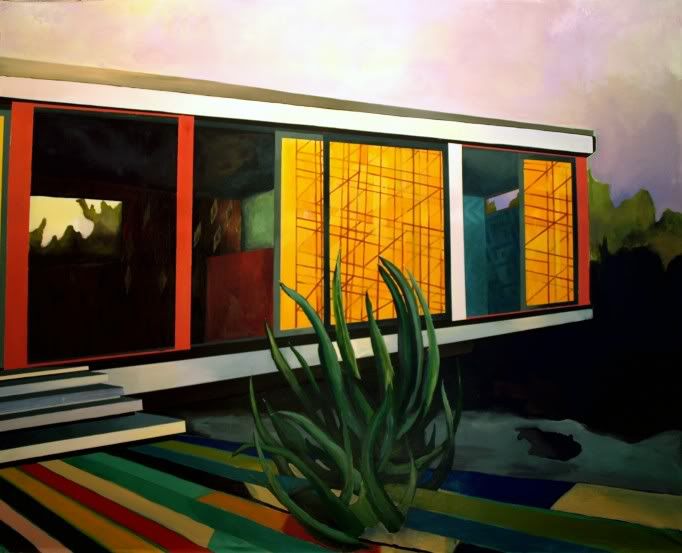
The work of American Erin Curtis, is much less dystopian, but it does have a certain haunting quality, despite the colour. {via happy mundane}


Ford Foundation
Acrylic on Canvas, 2008, 84 x 72 in.


Pool Shot
Mixed Media on Paper, 2008, 24 x 36 in.


For Sale
Acrylic on Canvas, 2008, 84 x 108 in.

I'm going to use this as an excuse to highlight Scottish illustrator Lizzy Stewart, simply because she rocks. If you aren't familiar with her work, do yourself a favour and go check out her portfolio and the about today etsy shop.


Nikolai Sutyagin's House
Image for FormFiftyFive's first publication 6x10
Also used as the basis for a customised screenprint.


One of the Broken House Triptych: Three drawings for an exhibition at Lower Haters, Haight St, San Francisco.


Built In Illustration inspired by a poem by Claire Askew as part of a collaboration between Edinburgh College of Art and Edinburgh Univeristy Creative Writers.


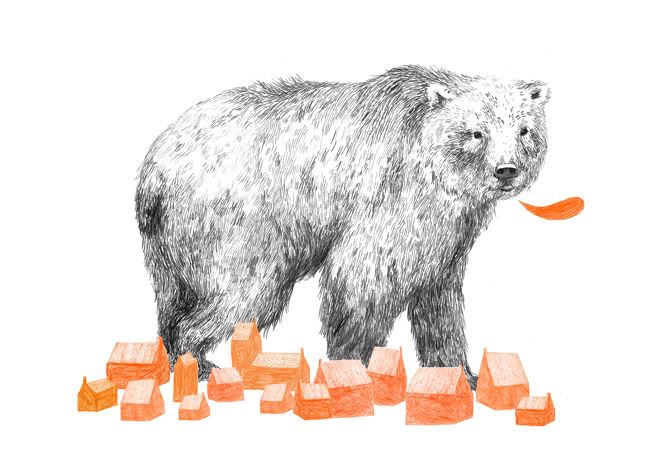
Giant Bear in Tiny Village Two colour screenprint

Which brings us back to bears, because really, can there be too many bears in this blog? No, I didn't think so.

Also, if the concept intrigues you, go check out dear ada where there is an entire "art about architecture" section.

Thursday, September 17, 2009

Other Hagiographies

The word hagiography makes me think of Robertson Davies. It is the study of saints. These are saints of a different sort.

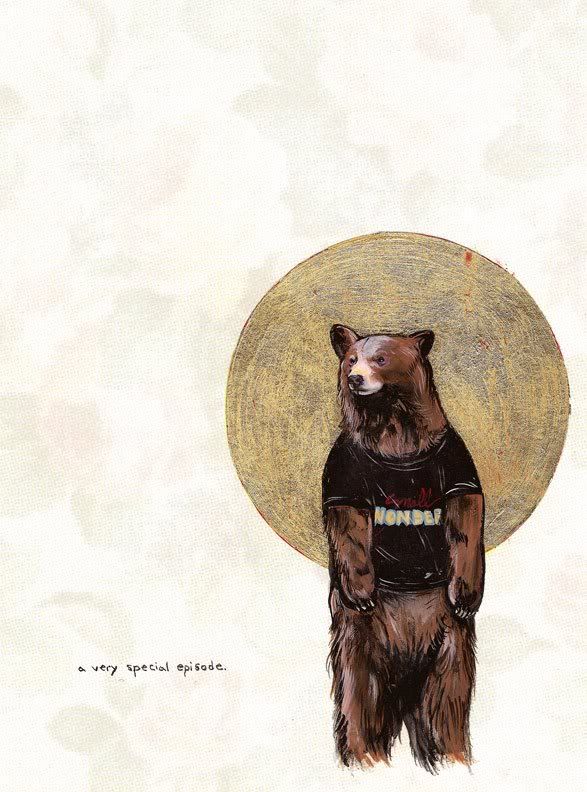
First, Steve Seeley's woodland sort of hagiography.


{psst... you really should also check out his extensive portfolio... it's not all sainted animals, sometimes it's superheroes, aliens, antlers, rainbows, creative anatomy and more, via je voudrai que}.

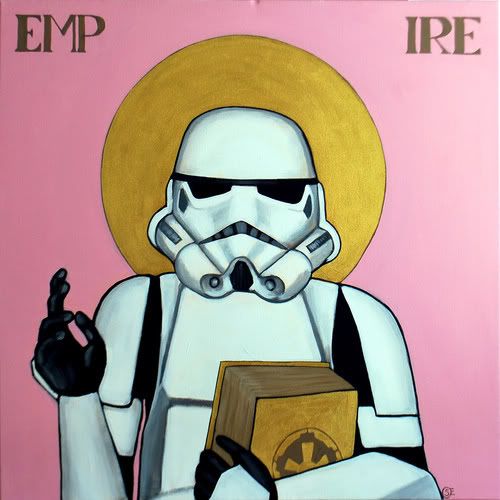
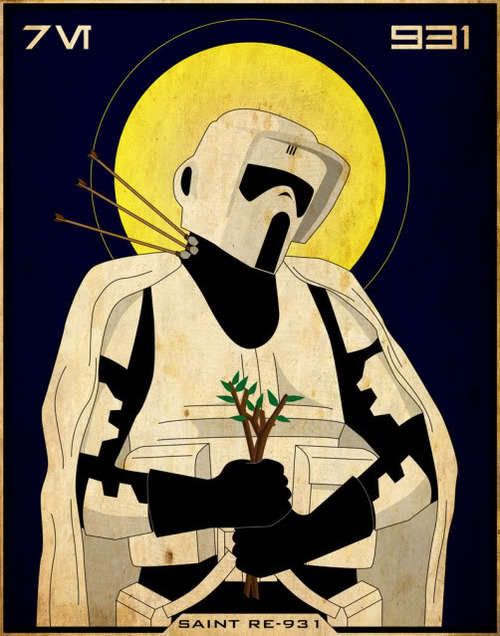
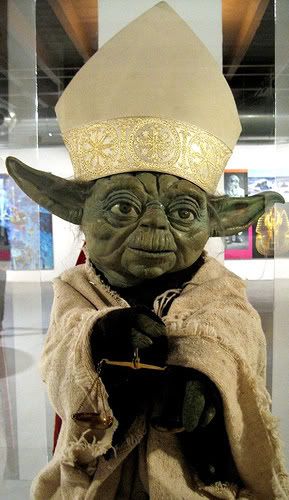
If robots and aliens are more you style, io9 has an entire gallery of Star Wars Saints.

Empire by Scott Erickson


Imperial Saints by Patrick King


Pope Yoda from La Nuova Figurazione Italiana

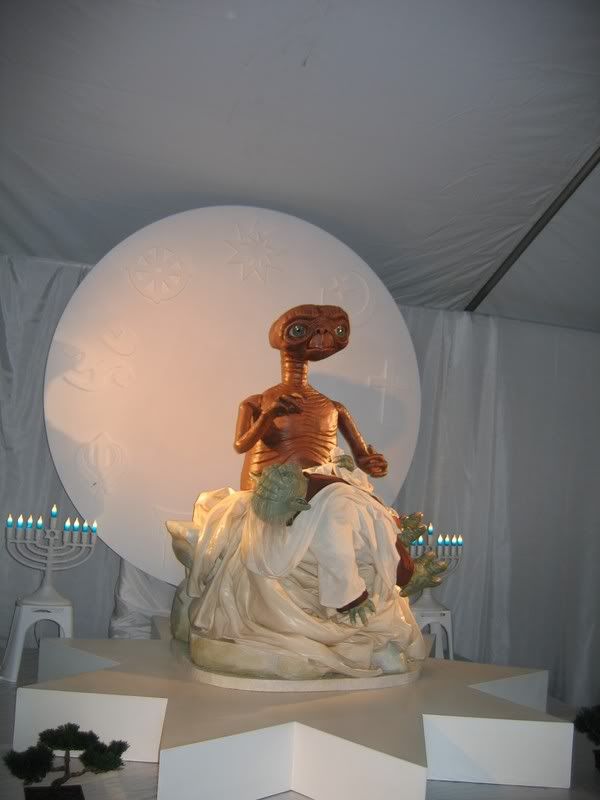
These remind me of a photo I took at Nuit Blanche in Toronto 2007 of the modern day pièta with E.T. and animatronic Yoda:

Wednesday, September 9, 2009

Working with the Insects (& other animals)

And while we are on the topic of insects (Were we? Oh dear!), how about an artists who collaborate with insects, rather than using their, um, corpses?
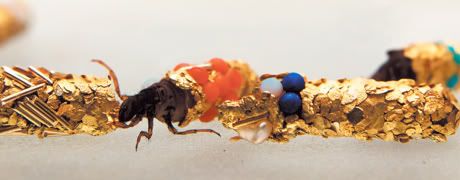


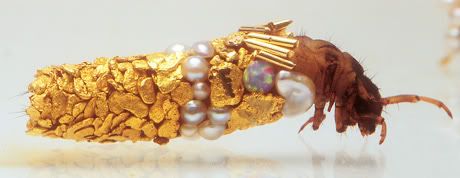
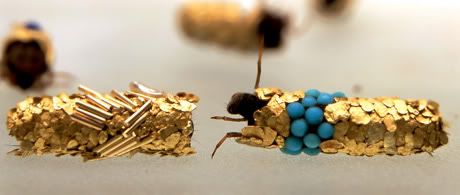
Duprat's aquatic caddis fly larvae, with cases incorporating gold, opal, and turquoise, among other materials. Photos Jean-Luc Fournier. via Cabinet and boyfrendo

French artist-naturalist Hubert Duprat collaborates with caddis fly larvae. Like their relatives the butterfly, they develop their wings while in silk cocoons, but they often incorporate random items for strength, like grains of sand, minerals, bits of plant, fish bone or shell- or random things they find lying around. Duprat carefully removes these, but provides them alternative media like gold spangles, pearls, semi- and precious stones. The larvae make their choices, using different available objects in their aquarium, or re-purpose previous blinged-out cocoons. Duprat traces his work to 19th century entomologists, who similarly tried introducing foreign objects to insects. The work straddles that interesting art-science divide.

American artist-beekeper Hilary Berseth works with bees. Using a framework of wire and wave, he coaxes or suggests to the colony how to construct their hives.
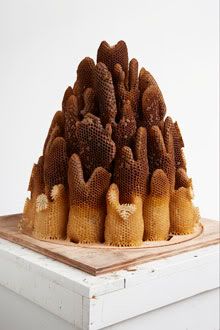

Programmed Hive #6, 2008
Honeybee comb on board mounted on hive super, wood, urethane foam, wire, metal, paint, UV lacquer
24 x 24 x 48 inches (61 x 61 x 121.9 cm)
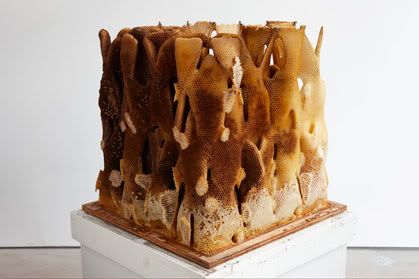

Programmed Hive #7, 2008
Honeybee comb on board mounted on hive super, wood, urethane, foam, wire, metal, paint, UV lacquer
47.5 x 29 x 26.5 inches (120.7 x 73.7 x 67.3 cm)

Canadian artist Aganetha Dyck also works with bees; she is interested in, "ramifications all living beings would experience should honeybees disappear from earth". She leaves objects in hives to be covered in honeycomb - a different sort of collaboration (a little more like Duprat, perhaps).
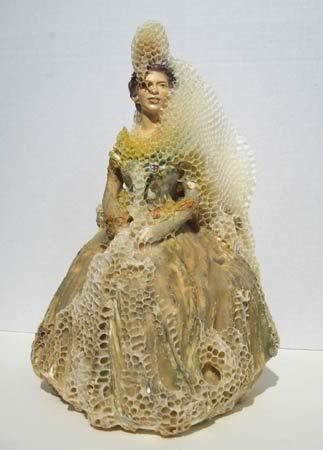

Aganetha Dyck, Queen, Beework on figurine of Queen Elizabeth II, 2007, 15 x 10 x 8", Michael Gibson Gallery, London, Ontario.
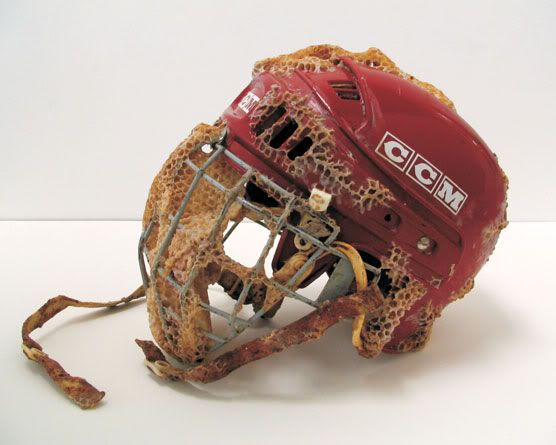

Sports Night in Canada: Helmet 2000, helmet, honeycomb, Kelowna Art Gallery
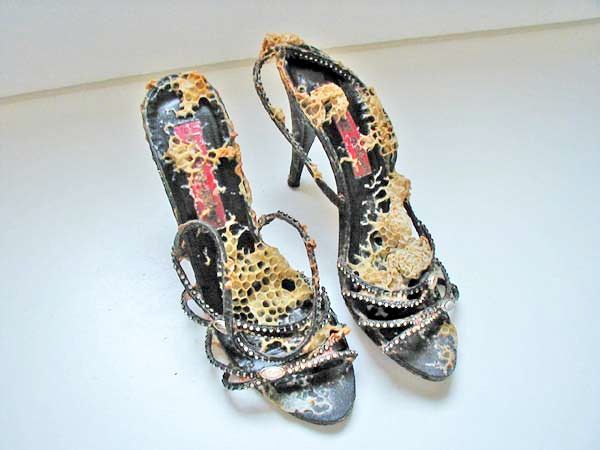

Shoes altered by bees

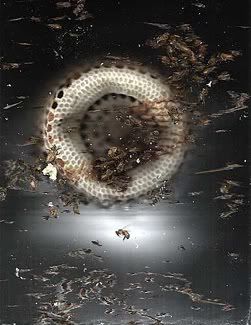
She also works with her son Richard Dyck to produce digital scans, like this one, of hives:

You may also enjoy the Finch&Pea article about artist Elsabé Dixon's collaboration with moths.

If you are interested in artwork by animals, check out Ottawa's SAW gallery. Currently, they are showing an exhibition called Animal House: Works of Art Made by Animals billed as the “first ever critical overview of animal art.” The artists include dogs, cats, elephants, chimpanzees, gorillas and a turtle.
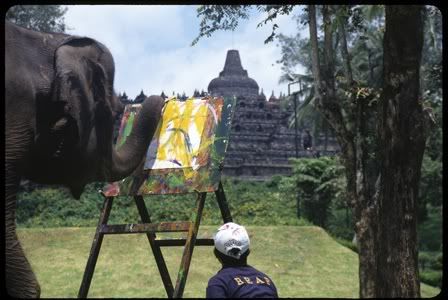

David Ferris Sela paints by the temple 2008 © David Ferris
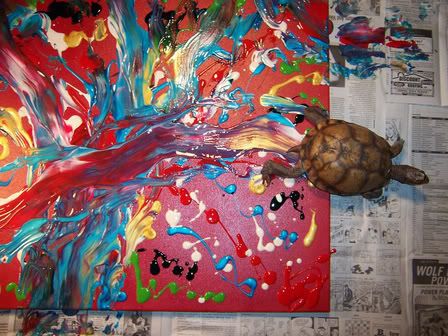

Kira Ayn Varszegi Koopa at work 2007

LinkWithin

Related Posts with Thumbnails