Thursday, February 18, 2010

Beasts


I recently read Lisa Jardine's Ingenious Pursuits, which details, amongst other things, the 17th century so-called scientific revolution, the gathering of many a collection (botanical, zoological, veritable cabinets of curiosity), and the early traveller-adventurer-biologist/artist. There was a time when this sort of science looked like art and art looked like science. To properly do descriptive science one really needed to be an artist.


Not only was Robert Hooke a brilliant engineer/experimentalist in physics, astronomy, chemistry and microscopy, he had training in draughtmanship. This helped him communicate his science and explains the impact of Micrograpia. While he travelled the world only in his imagination, many of his contemporaries of a more zoological bent, travelled the world quite literally. Some gathered all and sundry indiscriminately. Others produced invaluable scientific data, in the form of their illustrated bestiaries. These document ecology, zoology and anatomy, and provide a fascinating glimpse at the early dissemination of scientific information. The European colonists continued to sail the world in search of commercial gain, and with them went many an artist who saw that illustrating exotica was a means of making a living. Collecting prints was cheaper and more practical than gathering cabinets of curiosity, but both practices thrived well into the Victorian age. In The Artificial Kingdom: A Treasury Of The Kitsch Experience, Celeste Olalquiaga traces this tendancy to gather beastiaries and wunderkammer to a morbid fear of death.


So contemporary artist Walton Ford's images which employ the media of the 17th and 18th century naturalists, in which to make some more provocative statements, with violence, subjugation, suicide and other nasty human habits, ever-so-slightly below the surface, might be heightening tensions already implicit in his sources of visual inspiration. The societal critiques implicit in this art, seem to me to be true of the society which created the original natural histories, as it is of contemporary society.


To modern eyes, calling a chimp a "Monster" and chaining him by the neck is barbaric. But we know all to well, this is something we have a history of doing to our fellow humans.


The dying words of the Parakeet might evoke The Death of General Wolfe (at least, for Canadians), and yet instead of making me see the humanity in the parakeet, it makes me see the absurdity and the animal in us.


I found Ford's work via News From the Craft + Style Blogosphere {via Trends In Detail} today. I also noticed you can purchase his book, Pancha Tantra via Antropologie.

Wednesday, February 17, 2010

Thursday, February 11, 2010

adieu, magpie


R.I.P. Alexander McQueen, previously featured here.
Magpie&Whiskeyjack is saddened to read of the loss of this orignal, a creative genius.

Monday, February 8, 2010

starlight


sonic youth - 4 color screen print - 25"x13" - july 2009

Check out the portfolio of Massachusetts printmaker Dan McCarthy!


guiding light - 4 color screen print - 24"x16" - january 2010


helms/dino in the woods - 2 color screen print 26x10

{via Printeresting}

Sunday, January 24, 2010

Contemporary Victoriana


Raquel Aparicio, personal work

I notice the Victorian era seems to be a common inspiration in illustration of late. High collars and Daguerreotypes abound. You see in with the bright colours and ubiquitous, geometric, crystalline shapes or anthropomorphism or other trope which gives a new, contemporary and perhaps surreal spin.


Shary Boyle
2005. Porcelain, china paint. 20cm tall. Collection of the National Gallery of Canada.

Check out the portofolio of French illustrator Nancy Peña:


Nancy Peña Deux illustrations à l'encre de chine (two illustrations in china ink)


Nancy Peña 'Le Sofa' illustration à l'encre de chine


Nancy Peña 'Le motif dans le tapis' Illustration autour de l'album Tea party, à partir d'un motif de Verneuil

Historic figures are ubiquitous, and often blue-faced in the work of self-trained California artist Mike Maxwell.


Mike Maxwell Ellis Island Blues, 2007


Mike Maxwell Pressures of a Nation, 2008


Mike Maxwell Oh, These Chance Encounters, 2009

Blogosphere favorite Lisa Congdon is another self-trained California artist. You should check out the other sections of her portfolio too. It's filled with wildlife, text and multimedia.


Lisa Congdon Rose


Lisa Congdon Randolph


Lisa Congdon Levi

Interesting figures appear in the illustration work of the previously featured German artist Olaf Hajek.


Olaf Hajek Folklore Old Flowers


Olaf Hajek Editorial for Osterraets


Olaf Hajek Chopin

My motivation for depicting Victorians is the history of science, and the golden age of exploration.

pasteur 031
minouette, Louis Pasteur, lino block print on kozo, 2008

Ada, Countess Lovelace
minouette, Ada, Contess Lovelace, lino block print on kozo paper, 2009

Darwin on Galapagos
minouette, Darwin on Galapagos, lino block print on gampi paper, 2009

Thursday, January 14, 2010

Hooves


Check our German artist/designer Iris Schieferstein's portfolio. The hoof shoes and Gun Hoofs are only the beginning. {via design-milk.}

Wednesday, January 13, 2010

suspended spiderwebs and feathers

Compare and contrast:

Dream Catch Me
acrylic, gouache and vinyl on canvas
198 x 198 cm


Dream Catch Me 2
acrylic and pen on canvas
170 x 150 cm

By Kirra Jamison. Check out her owls, foxes, and other good things. {She's been bouncing around the web recently - no pun intended - but I think I first saw her in the Lady Lavona's Cabinet of Curiosities}


Meanwhile, Victoria over at sfgirlbybay had a guest post by Kelly of Halcyon Days (and y. a. studios) which features the above lamp (and its vintage showgirl inspiration). If we follow the link to Halcyon Days, we find some more webs-with-feather light fixtures, by Dutch artist Jennifer Tee {via all the mountains}:


Falling Feathers
Complex Interiors, Trance-lucent Concrete

She's also got suspended crystals and birds in South of the Border (an allusion to Haruki Murakami's South of the Border, West of the Sun.

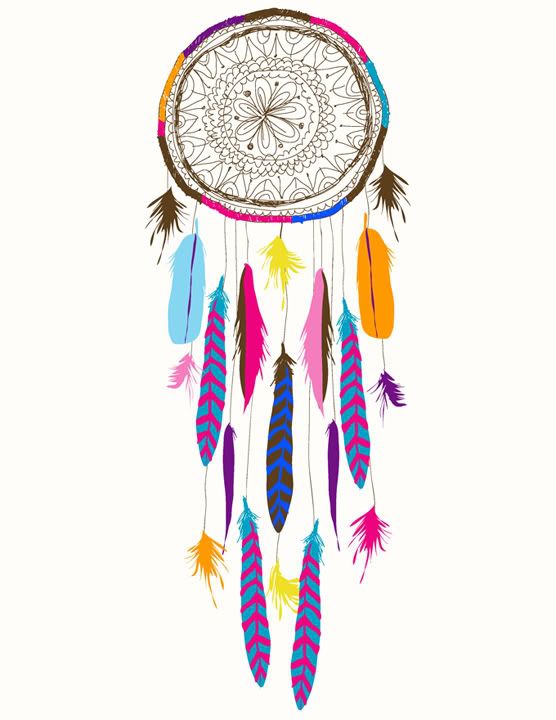
Of these, only Kirra Jamison explicitly cites the Ojibwe dreamcatcher, but that is what these say to me. Interestingly, that leads back to the God's Eye. These things seem to be wandering the collective unconscious.

These illustrations:


are by Yasmine Surovec of a print a day.

There are even dreamcatcher dresses in Ann-Sophie Back's autumn-winter '09 collection, 'Ann-Sofie Back burns in hell' (inspired by American stereotypes and horror flicks).

LinkWithin

Related Posts with Thumbnails